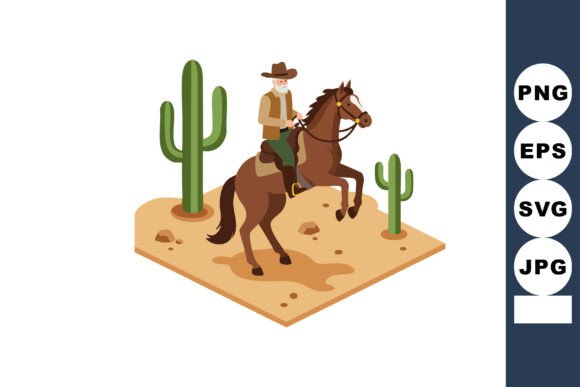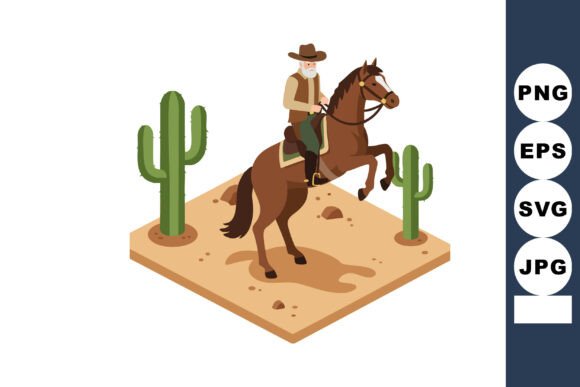
Cowboy Rearing Horse in Desert
When I sit down to evaluate a new digital asset for my embroidery studio, I am rarely looking at it as just an image. I am looking at it as a blueprint for thread, tension, and texture. As a designer who regularly produces custom apparel, embroidered patches, and boutique goods for small businesses, my eyes immediately scan for potential pitfalls: stitch density issues, tiny details that will vanish in the hoop, and color palettes that might clash with common fabric choices. Today, I am putting Cowboy Riding Rearing Horse in Desert Wi under the microscope to see if it holds up when translated from screen to stitch.
First Impressions and Visual Mood
The immediate appeal of this design lies in its dynamic energy. The vector captures a classic Wild West moment—a cowboy on a rearing horse set against a desert landscape complete with cactus plants and sandy ground. For an embroidery project, this high-contrast subject matter is inherently strong. The silhouette of the rearing horse provides a bold central shape that reads well even from a distance, which is crucial for items like sweatshirt embroidery or large tote bag designs.
Visually, the composition feels balanced but active. The verticality of the rearing horse allows for a tall, narrow placement on garments, while the horizontal spread of the desert floor offers flexibility for wider placements on pillows or blankets. The mood is rugged and adventurous, making it an excellent fit for themes related to outdoor lifestyles, western wear, or nostalgic Americana. It avoids being overly cartoonish, which helps maintain a sense of professionalism in finished products intended for adult audiences or commercial embroidery clients.
Real-World Application Scenarios
To truly understand the value of this machine embroidery design, we have to imagine it on actual products. Let’s look at how Cowboy Riding Rearing Horse in Desert Wi performs in specific use cases.
- Custom Apparel: On a heavyweight cotton sweatshirt or a denim jacket, this design would stand out beautifully. The thick lines typical of such outerwear can handle the detail of the horse’s mane and tail without losing definition. It adds a statement piece to basic blanks, elevating a simple garment into a handmade product with character.
- Accessories and Bags: A canvas tote bag is a perfect candidate. The sturdy fabric supports heavier stitching, and the western theme complements the utilitarian nature of the bag. Similarly, for a structured cap or hat, the curved surface presents a challenge, but the central focus of the horse works well on the front panel, drawing the eye immediately.
- Home Decor: I see this working exceptionally well on throw pillows or kitchen towels. The earthy tones implied by the desert setting (sandy grounds, green cacti) pair naturally with warm neutrals like beige, rust, or olive green fabrics. It brings a cozy, rustic vibe to a living room or farmhouse-style kitchen.
- Baby and Nursery Items: While the imagery is rugged, it can be softened through color choice. Using pastel threads for the background and keeping the horse silhouette clean makes this suitable for nursery decor or baby onesies, offering a unique alternative to traditional animal motifs.
Technical Considerations for Stitching
As an experienced reviewer, I must address the technical realities of digitizing and stitching this graphic. Since the source is provided as an Illustrations and Graphics file (SVG, EPS, JPG, PNG), you will likely need to convert or trace this for your specific embroidery machine unless it comes pre-digitized. Even if pre-digitized, several factors require careful attention.
Stitch Density and Detail: The cactus plants and the texture of the sandy ground introduce complexity. If these elements are rendered with too much fine detail, they may become muddy or cause thread breaks. I recommend checking the stitch density closely. Areas with dense fill stitch around the horse’s legs should be tested to ensure the fabric does not pucker. Conversely, the sky or open desert areas should use lighter running stitch or sparse satiny fill to keep the weight manageable.
Thread Color Contrast: The success of this design hinges on color separation. A light-colored horse on a dark fabric requires a distinct outline or shadow effect to prevent it from blending in. When planning your thread colors, consider using a contrasting base thread for the horse to make it pop against the darker desert backdrop. Testing in black and white mockups is a smart move here; if the shapes don’t read clearly without color, they won’t embroider clearly either.
Fabric and Stabilizer Choices: This design is versatile but demands the right support. For stretchy knits used in t-shirts or caps, a cut-away stabilizer is non-negotiable to maintain the integrity of the rearing horse’s shape over time. On woven fabrics like canvas or linen, a tear-away stabilizer may suffice for smaller placements. Avoid thin, sheer fabrics, as the weight of the embroidery could distort the material.
Pitfalls and Precautions
There are specific scenarios where Cowboy Riding Rearing Horse in Desert Wi might struggle. Small hoop sizes are risky; trying to cram the full landscape into a 4x4 inch hoop will result in lost details, particularly in the cactus leaves and the rider’s facial features. If you are producing embroidered patches or small lapel pins, you may need to crop the design to focus solely on the horse and rider, removing the background scenery entirely.
Additionally, textured fabrics like heavy tweed or bouclé can hide fine stitches. In these cases, the intricate parts of the desert landscape may disappear into the weave. For such materials, simplify the design or increase the size of the elements. Also, be mindful of curved surfaces like baseball caps; the rearing pose might look distorted if not adjusted for the curvature of the hat panel.
Final Verdict for Designers and Sellers
For Etsy sellers, craft business owners, and creative entrepreneurs, Cowboy Riding Rearing Horse in Desert Wi offers a strong foundation for a niche collection. It taps into the enduring popularity of western aesthetics without feeling cliché. Its adaptability across various product types—from personalized gifts to boutique branding—makes it a valuable addition to any design assets library.
However, the key to a successful finished product lies in preparation. Always test the design on scrap fabric first. Inspect the hoop size requirements and confirm whether the included files allow for commercial use if you plan to sell the embroidered items. By paying attention to stitch quality, color contrast, and appropriate fabric selection, you can transform this vector graphic into a professional, market-ready embroidery piece that customers will appreciate for its craftsmanship and style.